.avif)
TL;DR
- Employee endpoints are now part of the enterprise AI attack surface.
- Organizations need visibility into AI tools running on employee devices.
- Traditional endpoint security solutions weren't designed for AI-specific threats.
- AI endpoint security requires discovery, monitoring, control, and prevention.
Endpoints Aren't Just Devices. They're Part of Your AI Attack Surface.
As AI technologies become embedded in everyday operations, employee endpoints have evolved into something much more significant than just laptops and workstations. They’re now active participants in the enterprise AI ecosystem.
For security leaders, this represents a fundamental shift.
The conversation is no longer limited to protecting devices from malware or preventing unauthorized software installations. Organizations now need to understand which AI tools are operating across employee endpoints, what data they can access, what actions they perform, and whether those actions comply with organizational policies.
AI security for endpoints is a key priority for CISOs, especially as AI running on employee devices becomes the new norm.
What Is AI Endpoint Security?
AI endpoint security is the practice of discovering, monitoring, governing, and controlling AI technologies running directly on employee devices.
This includes AI desktop applications, browser-based AI tools, coding assistants, AI agents, MCP servers, AI agent skills, and other AI software operating on laptops and workstations.
Securing these environments requires additional AI-specific visibility and controls.
Organizations need to know which AI tools exist on employee endpoints, how employees are using them, what enterprise resources they access, and whether their behavior complies with security policies. Without this visibility, endpoints become one of the largest blind spots in the enterprise AI ecosystem.
Why Traditional Security Controls Are No Longer Enough
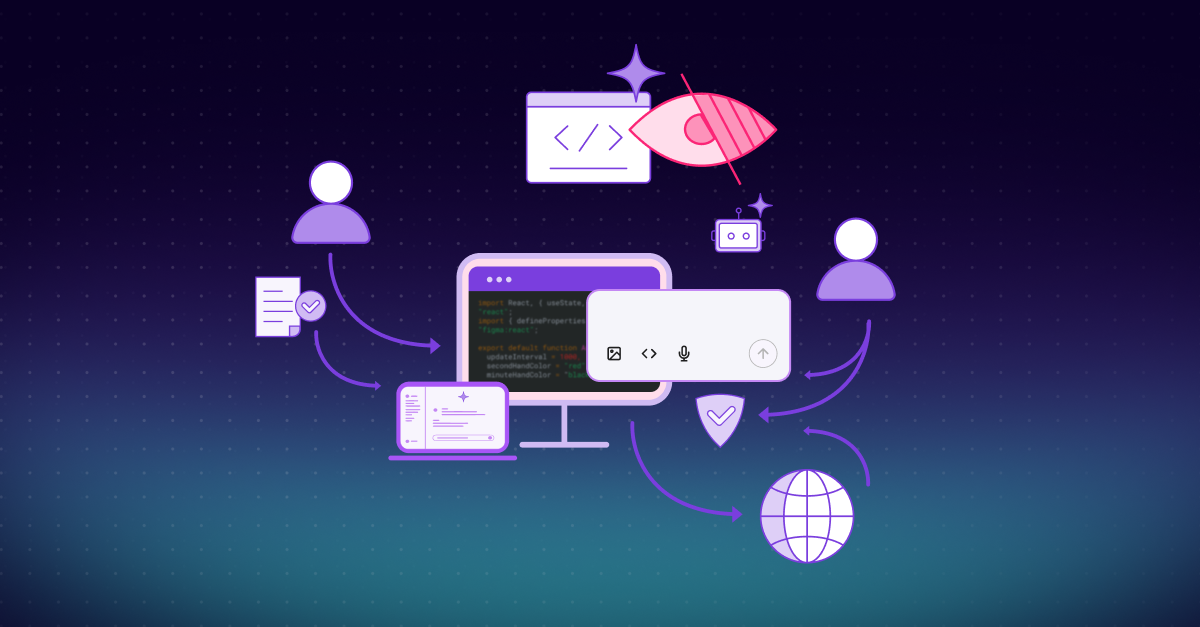
AI assistants and coding agents access local file systems, interact with integrated development environments, communicate with MCP servers, connect to enterprise applications, and perform multi-step actions on behalf of users. Traditional endpoint security solutions such as EDR were never designed to provide visibility into AI-specific activity, interactions, and risks.
As a result, organizations face a new set of questions they can't address with their current security stack:
- Can security teams identify all AI tools installed across employee devices?
- Do they know which coding agents have access to proprietary source code?
- Can they see which MCP servers employees are connecting to?
- Can they determine which AI tools are interacting with sensitive customer information or IP?
Without dedicated visibility into AI activity on employee endpoints, these activities can become endpoint shadow AI, operating outside established governance processes. The result is not only operational uncertainty; it’s governance risk.
CISOs are already balancing traditional security priorities while enabling AI adoption and more autonomous AI use. Unfortunately, FIFO doesn’t apply here. AI security controls are being added to existing enterprise security requirements, not replacing them.
Every Endpoint Is Now an AI Endpoint
The first wave of enterprise AI security focused on employees interacting with public GenAI tools through a browser. Today, the enterprise AI ecosystem also includes AI apps, coding agents, MCP servers, AI agent skills, and other AI technologies running directly on employee endpoints.
Each new AI capability running on an endpoint expands the attack surface. An AI coding assistant may access thousands of proprietary source code files. An AI agent may retrieve customer records, interact with CRM platforms, and trigger business workflows. An MCP server may provide an AI application with access to enterprise knowledge bases, internal databases, or third-party SaaS platforms.
These interactions happen continuously throughout the workday. Collectively, they create a new operating layer inside the enterprise, one that sits directly on employee devices.
Organizations that continue treating endpoints as traditional devices risk overlooking one of the fastest-growing areas of enterprise AI security exposure.
Discover AI on Employee Endpoints
Organizations can’t govern AI activity they can’t see. The place to start is always visibility, building a complete inventory of AI technologies running on employee endpoints.
Security teams should have visibility into:
- AI applications
- Coding agents
- MCP servers
- AI agent skills
- Other AI tools installed on employee devices
This allows organizations to distinguish approved AI technologies from shadow AI, understand where AI is being used across employee endpoints, identify unmanaged risks, and establish the foundation for governance.
Monitor AI Activity
Discovery answers the question: What AI tools are running?
Monitoring answers the next important question: What are these AI tools actually doing?
Security teams need continuous, real-time visibility into AI activity across employee endpoints to understand how AI interacts with enterprise data, systems, and users.
That means identifying threats, risky actions, data leaks, unauthorized behavior, and compliance gaps.
Enforce AI Policies in Real Time
Governance becomes meaningful only when policies can be applied where AI interactions actually occur. Employee endpoints can no longer be ignored from an AI security perspective.
Organizations should be able to block unauthorized AI tools, restrict risky actions, and prevent policy violations in real time.
Automated, real-time policy enforcement is the difference between having a policy on paper and actually applying it.
When organizations can rely on policy enforcement, they can scale AI adoption with confidence that employees have clear guardrails that protect both the business and users.
Control AI Actions
AI is moving beyond generating answers to writing code, running business processes, accessing databases, connecting to business applications, and interacting with third-party platforms. Organizations need to think not only about employee activities, but also about the actions AI tools perform on their behalf.
Security teams need to control what AI tools running on employee endpoints can access and the actions they can perform. This helps prevent unauthorized access to sensitive data, stop risky actions before they impact the business, and ensure employees use AI responsibly and in accordance with organizational policies.
As AI becomes another operational actor inside the enterprise, security teams need to treat it as such.
Prevent AI Threats
Visibility and governance are essential, but they’re only effective if they lead to prevention.
Organizations should be able to proactively stop endpoint AI-related threats before they impact the business, including:
- Prompt injection
- Malicious MCP servers
- Risky actions
- Data leaks and sensitive data exposure
- Unauthorized AI activity
- Policy violations
The objective isn't to restrict AI adoption. It's to reduce risk while allowing employees to benefit from AI safely.
When prevention happens in real time, organizations avoid the costly cycle of discovering incidents only after data has been exposed or policies have been violated.
Safe AI Adoption Starts at the Endpoint
The discussion around AI often focuses on productivity, and for good reason. AI is helping organizations move faster, automate routine work, improve decision-making, and accelerate software development.
But productivity alone doesn’t create business value. Trust does.
Employees will continue adopting AI because it helps them do their jobs more effectively. The question for security leaders is no longer whether AI belongs in the enterprise. It’s whether the organization has the visibility, governance, and controls needed to manage it responsibly.
Employee devices have become key entry points into the enterprise AI ecosystem. Organizations that treat endpoints as active participants in this ecosystem will be better positioned to innovate securely.
The future of AI security will be determined by giving organizations the confidence to innovate freely with AI while maintaining visibility, governance, and control across AI activity on employee endpoints.
FAQ
AI endpoint security is the practice of discovering, monitoring, governing, controlling, and preventing risks associated with AI technologies running directly on employee devices.
Traditional endpoint security solutions such as EDR weren’t designed to provide visibility into AI-specific activity, interactions, and risks created by AI tools.
Organizations can’t govern AI activity they can’t see. Without visibility into AI activity on employee endpoints, organizations face operational uncertainty, governance risk, and endpoint shadow AI.
Security teams should continuously monitor for threats, risky actions, data leaks, unauthorized AI activity, compliance gaps, prompt injection, malicious MCP servers, and policy violations.
Organizations should discover AI technologies, monitor AI activity, enforce policies in real time, control AI actions, and proactively prevent AI-related threats across employee endpoints.
.avif)