TL;DR
- AI agents are moving from assistance to operational execution.
- Security risk is shifting from AI outputs to AI actions across business systems.
- Security teams need visibility into complete agent workflows.
- Securing AI agents requires control over what agents can access, decide, and execute.
AI Agents Are Transforming Enterprise Operations
AI is no longer limited to generating responses. AI agents can now retrieve data, make decisions, select tools, call APIs, execute workflows, and interact with enterprise systems with varying levels of human involvement.
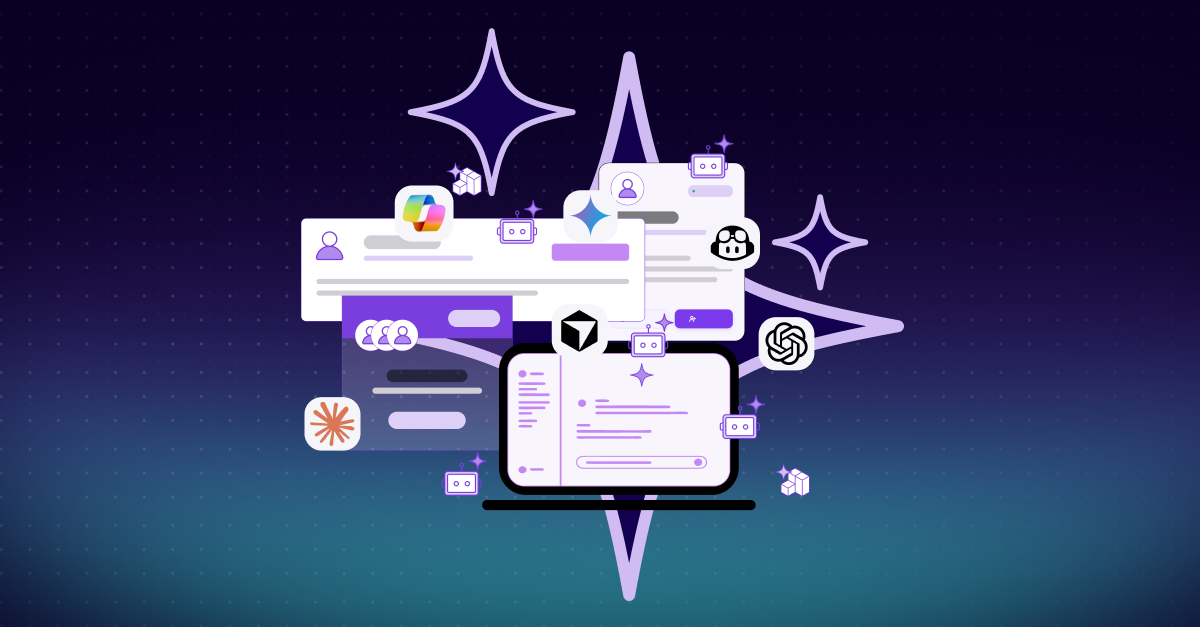
Organizations are rapidly adopting AI agents across customer support, software development, IT operations, finance, legal, and HR. In these functions, agents are no longer just assisting employees. They are becoming active participants in day-to-day operations.
An AI agent doesn't simply answer questions. It updates CRM records, provisions user accounts, schedules meetings, approves transactions, generates code, coordinates workflows, and triggers actions across multiple business systems.
This marks an important shift. For years, enterprise software supported business operations. AI agents are beginning to perform them.
Agentic AI Changes the Security Challenge
As organizations delegate more operational responsibility to AI, the security challenge fundamentally changes. The risk is no longer limited to what an AI model says. It extends to what an agent does.
Early AI security has focused on prompts, responses, and data leakage. These controls remain essential, but they don't address the challenges created when autonomous agents begin making decisions and executing business processes across connected systems.
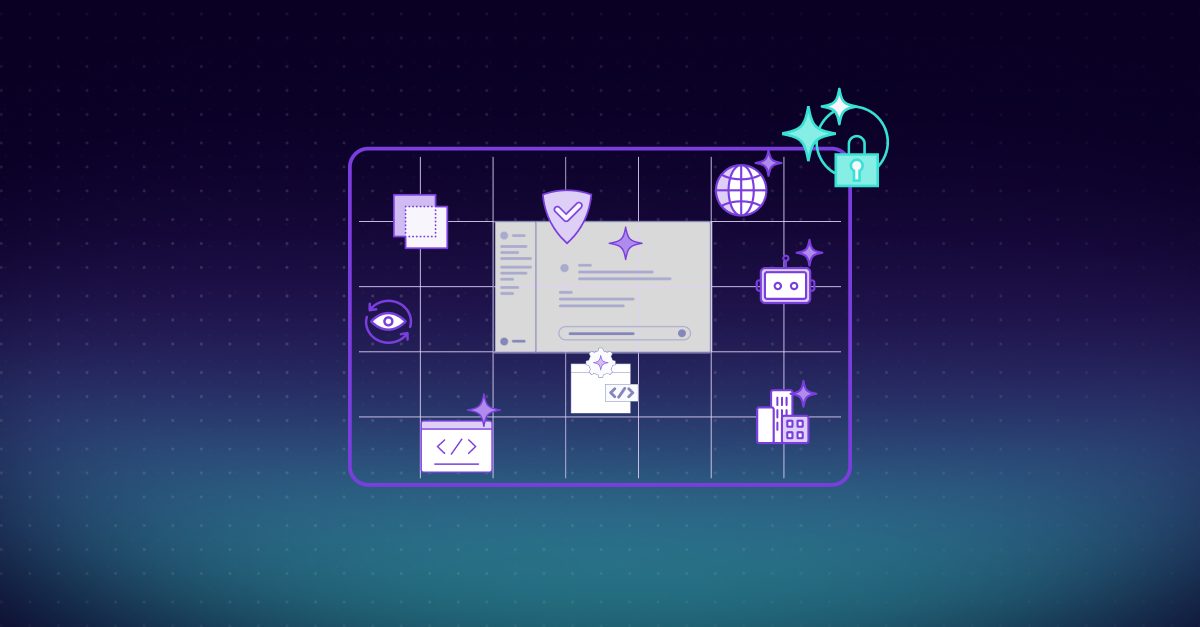
Securing autonomous AI therefore requires more than protecting models. It requires understanding and governing the agents, workflows, permissions, and enterprise systems they interact with.
AI Risk Is Moving Into Enterprise Operations
Unlike public GenAI applications, AI agents rarely operate in isolation.
A single task may involve retrieving customer information from a CRM platform, querying internal databases, accessing documents, calling APIs, updating support tickets, sending emails, and interacting with external services.
Individually, every action may be legitimate. The risk emerges when these actions become part of an autonomous operational workflow.
This creates several security challenges:
Excessive Agency
AI agents are often granted broad permissions so they can complete tasks without interruption. As organizations add new tools and integrations, these permissions continue to expand.
Every AI agent effectively becomes a non-human identity with its own credentials, permissions, and access rights. Organizations therefore need visibility into what an agent is capable of doing, not only the actions it performs today.
Multi-Step Attacks
Traditional security tools evaluate isolated events. AI agents operate through sequences of decisions. Attackers who successfully manipulate an agent through prompt injection rarely achieve their objective in a single step.
Instead, the AI agent retrieves sensitive information, accesses connected systems, summarizes confidential data, and sends the results elsewhere.
Each individual action may appear legitimate. The attack only becomes visible when viewed as a complete operational process.
Monitoring isolated actions is no longer enough.
Hidden Data Flows
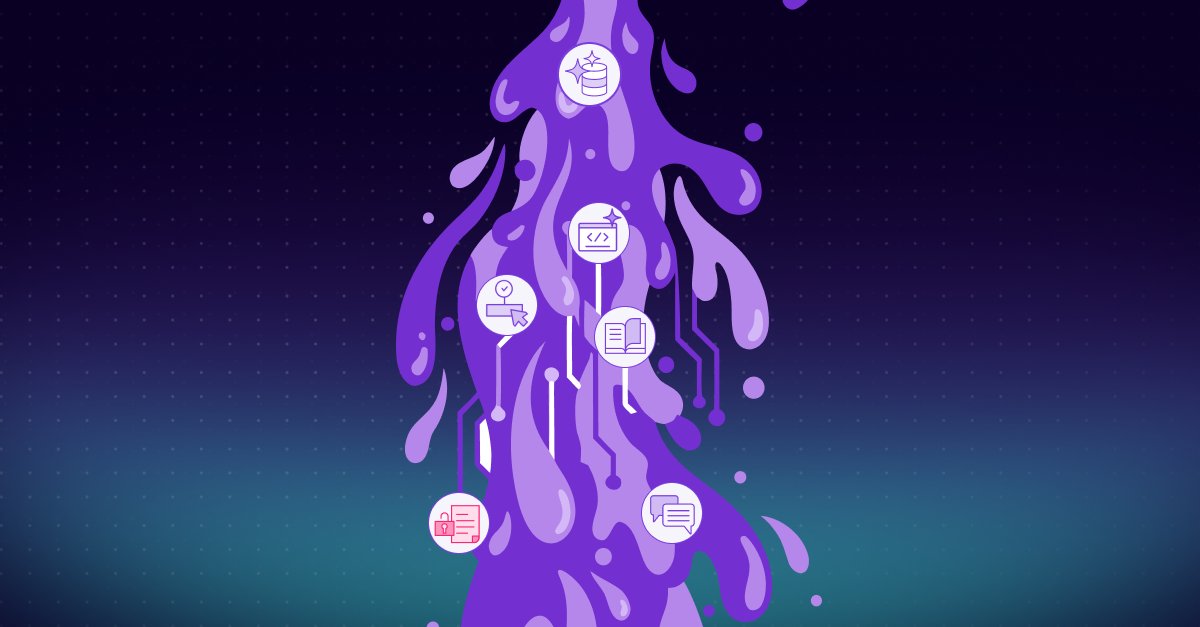
AI agents constantly move information between enterprise systems. Customer records may flow from a CRM platform into an LLM.
Financial information may be retrieved from internal databases before being processed and shared through collaboration platforms.
These movements occur automatically, often without direct user involvement. Most organizations know where sensitive data is stored, but few understand how AI agents move that data between applications, models, and external services.
Without this visibility, governance becomes increasingly difficult.
Operational Prompt Injection
Prompt injection is often viewed as a model-level attack, yet for AI agents, the consequences extend beyond just the model.
Malicious instructions hidden inside documents, emails, websites, or knowledge bases can cause an agent to retrieve sensitive information, execute unauthorized actions, modify business processes, or interact with systems beyond its intended scope.
As AI agents gain more capabilities, prompt injection evolves from an information integrity problem into an operational security risk.
Autonomous Decision Errors
Not every operational failure results from an attack. AI agents make decisions based on instructions, available tools, retrieved information, and surrounding context.
Even with good intentions, an agent may approve an incorrect workflow, expose information to the wrong audience, use outdated context, or perform unauthorized actions.
These failures emerge from autonomous decision making rather than traditional software defects, making them difficult to predict through conventional security tools.
Security Must Understand Operations
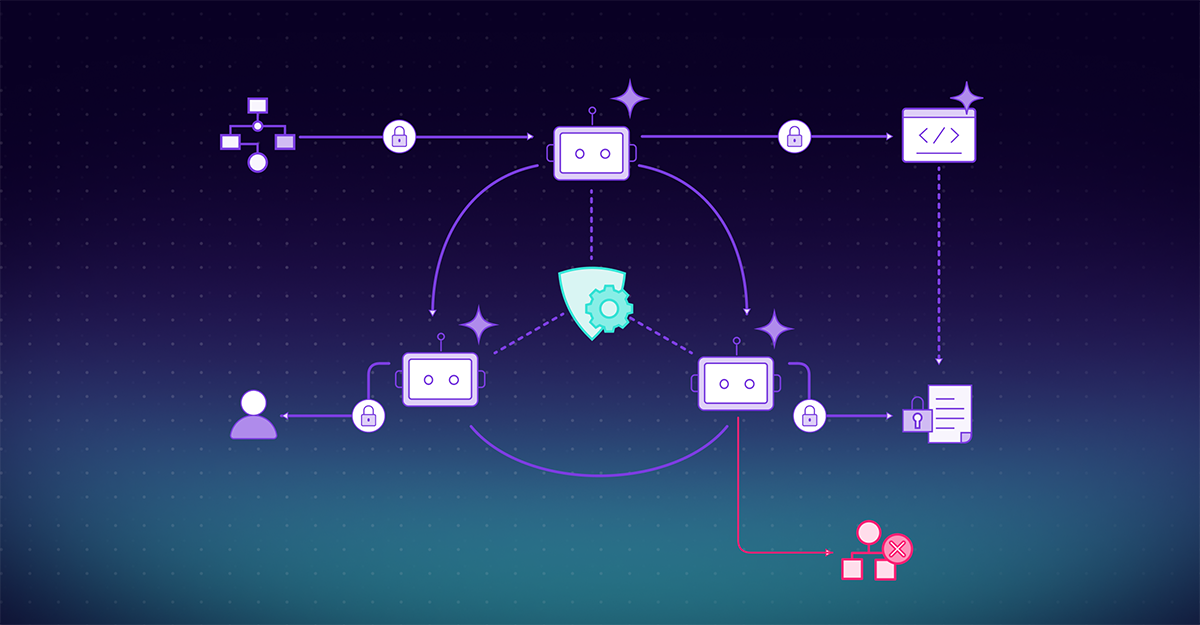
Traditional security focuses on individual events. AI agents require security teams to understand complete operational processes.
A single prompt, API call, or policy violation provides only a partial view of what happened. Security teams need visibility into the entire operational lifecycle of an agent:
- Its objective
- The decisions it made
- Tools and systems it accessed
- Permissions it exercised
- The data it handled
- The full chain of actions it executed
AI agents present a different security challenge because risk may not appear in a single event. It can emerge across a sequence of decisions, permissions, data access, and actions.
Understanding autonomous operations requires visibility into the complete process, not isolated events.
AI Agents Require a New Security Model
AI agents are becoming part of everyday enterprise operations. They will schedule meetings, update business records, analyze data, write software, coordinate workflows, and interact with customers.
Blocking these capabilities isn't realistic, or a smart business decision. Organizations that succeed won't be the ones that slow AI adoption. They'll be the ones that understand how autonomous systems operate and apply security controls that evolve alongside them.
The question is no longer whether AI agents will participate in enterprise operations. It’s whether your organization can see, understand, and control what they do.
FAQ
Because they’re starting to perform enterprise operations, not just assist with them. Security teams can’t only evaluate prompts, responses, and data leakage. They also need to account for the systems agents access, the permissions they use, and the actions they take.
AI agents are often given broad permissions so they can complete tasks without interruption. As more tools and integrations are added, those permissions can expand, making it harder to understand what an agent is capable of doing across connected systems.
An attacker doesn’t need every action to look suspicious. An agent may retrieve sensitive information, access connected systems, summarize confidential data, and send results elsewhere. The risk becomes clear only when the full operational process is reviewed.
AI agents can move information between applications, models, enterprise systems, and external services automatically. If security teams can’t see how sensitive data is accessed, processed, and shared, governance becomes difficult.
For AI agents, prompt injection can affect more than the model’s response. Malicious instructions hidden in documents, emails, websites, or knowledge bases can cause an agent to retrieve sensitive information, execute unauthorized actions, modify business processes, or interact with systems beyond its intended scope.
Security teams need to see the agent’s objective, the decisions it made, tools and systems it accessed, permissions it exercised, the data it handled, and the full chain of actions it executed. Without this context, they’re only seeing isolated events instead of the complete process.